Introduction
In today’s financial world, the word IPO is becoming more and more popular. You might have heard people saying, “This company is coming with an IPO,” or “I applied for the IPO but did not get the allotment.” But what does IPO actually mean? Why do companies bring an IPO? And how can a normal person benefit from it?
In this blog, you will understand what an IPO is in very simple English—no technical language, no complicated terms. Just pure, easy, beginner-friendly explanation.
What Is an IPO? (IPO Meaning in Simple English)
IPO means Initial Public Offering.
Break it into simple words:
- Initial = First
- Public = Common people
- Offering = Giving shares
So, IPO means a company is selling its shares to the public for the very first time.
When you apply for an IPO, you become a small owner of that company.
Why Do Companies Launch an IPO? (Top Reasons)
A company does not go public without reason. There are strong business motivations behind launching an IPO:
1. To Raise Capital
Companies require large funds to grow. IPO allows them to raise huge amounts of money instantly.
2. To Expand Operations
Funds can be used for:
- Opening new branches
- Buying machinery or technology
- Expanding production
- Entering new markets
3. To Pay Off Debts
Many companies clear old loans or reduce financial burden through IPO money.
4. To Improve Brand Value
A listed company gets:
- Higher credibility
- More transparency
- Better public trust
5. To Give Exit to Early Investors
Angel investors, venture capitalists, or private equity funds often sell some of their shares during an IPO.
6. To Increase Liquidity of Shares
Listed companies allow easy buying and selling of shares.
In short:
Companies launch an IPO to raise money and become bigger.
How Does an IPO Work? The Full IPO Process Explained
Launching an IPO is a multi-step process. Companies need approvals, audits, and regulatory clearance before going public.
Here is the complete IPO process:
Step 1: Hiring Underwriters (Investment Banks)
Companies appoint one or more investment banks such as:
- ICICI Securities
- Kotak Mahindra Capital
- HDFC Bank
- Axis Capital
These banks guide the company, prepare documents, and help set the share price.
Step 2: Filing DRHP With SEBI
The company must prepare a Draft Red Herring Prospectus (DRHP) — a detailed document that includes:
- Company history
- Financial statements
- Profit/loss record
- Risks
- Business model
- IPO details
DRHP is submitted to SEBI for approval.
Step 3: SEBI Review and Approval
SEBI checks:
- Accuracy of data
- Legality
- Financial health
- Risk disclosures
After review, SEBI approves the IPO.
Step 4: Roadshows and Marketing
Company representatives meet investors to promote the IPO and explain growth plans.
Step 5: Price Band Announcement
The company sets a price band, for example ₹250–₹260 per share.
Investors can bid within this range.
Step 6: IPO Opens for Subscription
Usually for 3 days, investors can apply via:
- UPI
- Net banking ASBA
- Broker apps (Zerodha, Groww, Angel One)
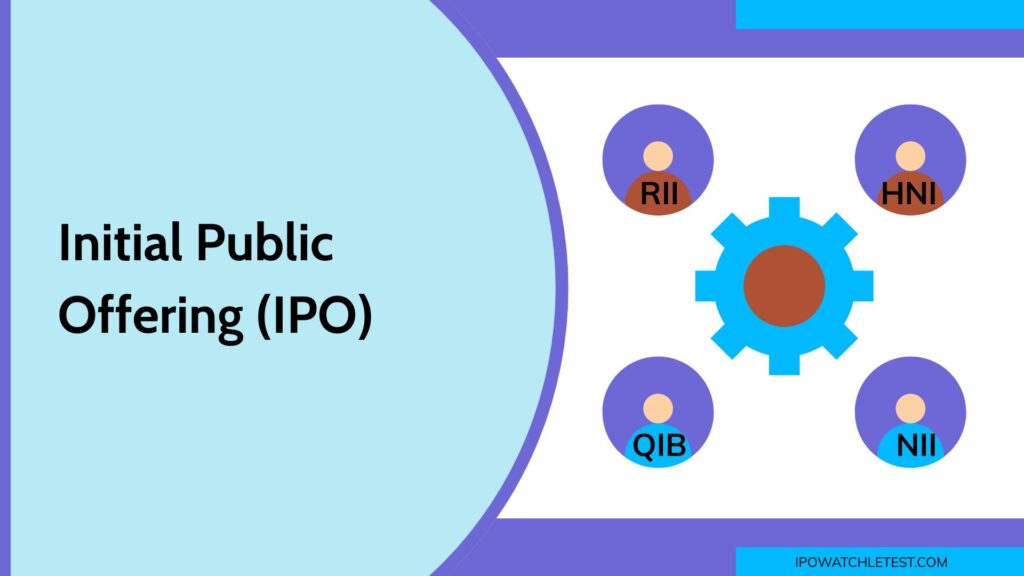
Categories include:
- Retail Investors (RII)
- Non-Institutional Investors (NII/HNI)
- Qualified Institutional Buyers (QIB)
Step 7: Allotment of Shares
After subscription closes:
- Shares are allotted
- Refunds are initiated for unsuccessful applicants
- Allotment status can be checked online
Step 8: Listing on Stock Exchange
On the listing day:
- Shares start trading on NSE/BSE
- Price may go up (listing gain) or fall (listing loss)
Who Can Apply for an IPO?
There are three types of investors:
- Retail Investors (common people)
- HNIs (big investors)
- QIBs (banks & institutions)
Retail investors get a special quota.
Benefits of Applying for IPO
- Listing Gain
If stock lists higher than issue price → instant profit.
- Long-term growth
Good companies grow massively after listing.
- Easy to apply
You can use UPI from your mobile.
- Minimum investment
Usually between ₹14,000–₹15,000.
Risks in IPO
You may face listing loss
Company may be overhyped
You may get no allotment due to heavy demand
Always research before applying.
GMP (Grey Market Premium) – Simple Explanation
GMP shows the expected listing price.
Example:
If IPO price = ₹100
GMP = ₹50
Expected listing = around ₹150
But remember:
GMP is unofficial. It can be wrong.
IPO vs Normal Shares
| Feature | IPO | Normal Shares |
| Buying Time | Before listing | After listing |
| Price | Fixed Band | Market price |
| Allotment | Lottery | Instant buy |
| Risk | listing gain/loss | Market ups & downs |
Benefits of an IPO for Investors
- Chance to buy shares at an early stage
- Potential listing gains
- Long-term wealth creation
- High transparency due to SEBI rules
Risks of an IPO
- Listing may be below the issue price
- Market volatility
- Overvaluation of companies
Common FAQs About IPO
Q1. What is the minimum amount required to apply for an IPO?
It depends on the lot size.
If lot price is ₹14,000-₹15,000, that’s the minimum.
Q2. Can I apply for multiple IPOs?
Yes, Anyone can apply for IPOs.
Q3. Is IPO allotment guaranteed?
No. Allotment is based on demand and lottery system.
Q4. Is investing in IPO safe?
It is safe but not risk-free. You must analyze the company before investing.
Q5. Can IPO funds be refunded?
Yes. If you do not get allotment, refund happens automatically through UPI.
Final Words
An IPO (Initial Public Offering) is a major business event that gives companies access to public capital and gives investors a chance to participate in early-stage growth stories. Like all investments, it offers both opportunities and risks. With proper analysis, understanding, and knowledge, investors can make informed and profitable decisions.